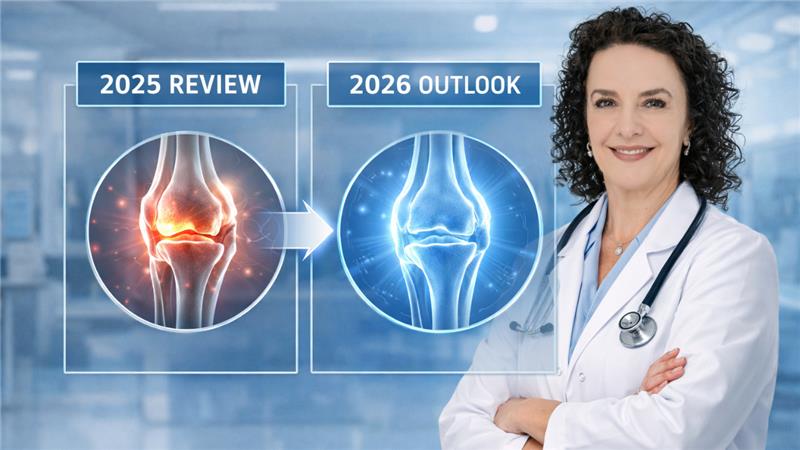
Regenerative Medicine Breakthroughs for Knee Pain in 2025
In 2025, people with knee pain were flooded with promises, from social media ads to clinic brochures, saying they could skip surgery and get back to pain-free living through regenerative medicine. Some were told that PRP and stem cells could rebuild their knees. Others were offered miracle solutions with no clear science behind them. But as the dust settles and we head into 2026, it’s time for a reality check.
The noise around regenerative medicine keeps getting louder. But louder doesn’t always mean better. The real advancements last year weren’t flashy, but they were important. Better science, better patient selection, and smarter techniques quietly improved how doctors help people with chronic knee pain. This post breaks down what truly changed in regenerative medicine, what failed to live up to the hype, and what patients should know moving forward.
Episode Video
Regenerative Medicine in 2025 - Quiet Progress, Not Bold Promises
While the headlines focused on dramatic claims, the biggest wins in 2025 came from refining what already exists. Research published in major journals like Osteoarthritis and Cartilage and The American Journal of Sports Medicine showed that success with PRP and stem cell therapy depends on several factors. Most importantly, the stage of knee arthritis, joint alignment, and a patient’s overall biology.
Patients with mild to moderate knee osteoarthritis benefited the most. The reason? Their joint structure was still intact enough to respond to treatment. For years, this data sat in the background. But in 2025, more doctors began to take it seriously, using it to guide who should, and shouldn’t, receive regenerative treatments.
Another major shift came with technique. Studies from PM&R and Skeletal Radiology confirmed that using imaging to guide injections led to more precise and effective treatment. Doctors now understand that in regenerative medicine, hitting the right spot isn’t optional, it’s essential.
And perhaps most importantly, patient expectations changed. Wild claims about growing new cartilage took a back seat to more realistic goals: pain relief, improved function, and getting back to activity. That shift alone likely helped many patients avoid disappointment and make smarter treatment decisions.
What Didn’t Work - Overhyped Cell Therapies for Advanced Arthritis
Despite the progress, not everything in 2025 lived up to its promise. Some of the loudest voices were promoting cell therapies for advanced knee arthritis, where joint damage is severe and mobility is already limited. But real-world studies told a different story.
Trials showed that when alignment, biomechanics, and load-bearing issues aren’t corrected, cell therapy results for late-stage arthritis are inconsistent at best. This explains why some patients are told that regenerative therapy won’t help once their arthritis reaches a certain point.
Still, that’s not the full picture. One of the most important long-term studies in regenerative orthopedics followed patients with very advanced arthritis. In these studies, one knee was treated with a traditional knee replacement, while the other received a special form of stem cell therapy called intraosseous bone marrow concentrate, cells injected directly into the bone. The results? Many patients experienced real pain relief and functional improvement, even years later.
These studies don’t contradict the rest of the research, they add to it. They show that in advanced cases, how and where the cells are delivered can make all the difference. But again, these are the exceptions, not the rule.
Key Takeaways from the Data
Looking across all the published evidence from journals like Cartilage, Osteoarthritis and Cartilage, and The American Journal of Sports Medicine, some clear lessons emerge:
Regenerative medicine is not a one-size-fits-all solution. Cell therapies don’t work equally well in everyone, especially in cases of advanced arthritis.
Results improve when the root causes, like poor joint alignment or weak muscles, are treated first. And the more precisely doctors target the treatment area, the better the chance of success.
Exceptional outcomes are possible, but they are rare. It’s important for patients to have hope, but not false hope. Honest conversations about what to expect can help prevent disappointment and guide better decisions.
What’s Next for Regenerative Knee Care in 2026
The biggest breakthroughs coming in 2026 won’t be new miracle substances. They’ll be smarter approaches. Doctors are now focusing more on improving what happens before the injection than on the injection itself. That includes addressing inflammation, metabolic health, and muscle strength ahead of time. These are things that dramatically affect how well someone responds to treatment.
Rather than chasing shiny new labels, the future of regenerative medicine will center on better timing, better preparation, and better integration with physical therapy and other care.
Real Stem Cell Therapies (Separating Fact from Fiction)
A lot of confusion still surrounds stem cell therapy, especially in online marketing. Here’s what’s real and what’s not.
Only autologous stem cell treatments, where a patient’s own cells are used, are supported for orthopedic use outside of a clinical trial. So-called “birth tissue” products sold as stem cells are not alive and are not FDA-approved for joint therapy.
Real science is focusing on three areas:
Culture-expanded bone marrow cells, especially in offshore locations like Grand Cayman, where doctors grow a patient’s own cells in a lab under safe conditions.
Culture-expanded fat-derived cells, being studied in FDA-regulated trials in the US.
Investigational allogeneic cell therapies, developed under strict lab conditions and tested in approved clinical trials, mostly outside the US.
These treatments aren’t part of standard care yet. But they represent the future of what’s scientifically possible, not the hype.
Final Thoughts
If you're considering regenerative medicine for knee pain in 2026, keep this in mind. The big advances aren’t about magic cures. They're about smarter thinking, better planning, and realistic expectations.
The best outcomes come when the right patients are selected, the right prep work is done, and the treatment is delivered with precision. Regenerative therapy can be powerful, but it's not a shortcut, and anyone promising otherwise isn’t looking at the evidence.
This isn’t about selling dreams. It’s about helping people make informed choices that actually improve their lives. Whether they’re just beginning to explore options or already deep in the decision-making process.
Frequently Asked Questions
What stage of knee arthritis responds best to regenerative medicine?
Patients with mild to moderate arthritis often see the best results. Advanced arthritis may respond less consistently, especially if joint alignment and strength aren’t addressed first.Is stem cell therapy approved in the U.S. for knee pain?
Only autologous stem cell therapies used under a physician’s care are permitted. Culture-expanded cell treatments are often done offshore due to regulatory limitations.Can regenerative medicine rebuild knee cartilage?
Regenerative treatments are more about improving pain and function than regrowing cartilage. Some studies show structural changes, but this is not a guaranteed outcome.Do PRP or stem cell injections work for bone-on-bone arthritis?
Results vary. Some advanced cases may still benefit, especially when treatments target the subchondral bone. However, these are exceptions and not typical results.Is image-guided injection better than blind injection?
Yes. Studies confirm that image-guided injections are more accurate, and accuracy plays a big role in regenerative therapy success.
If you're ready to take control of your knee pain, click here to discover more about these five effective knee pain home treatments. With these simple steps, you can start your journey towards pain-free knees and a more active lifestyle.


