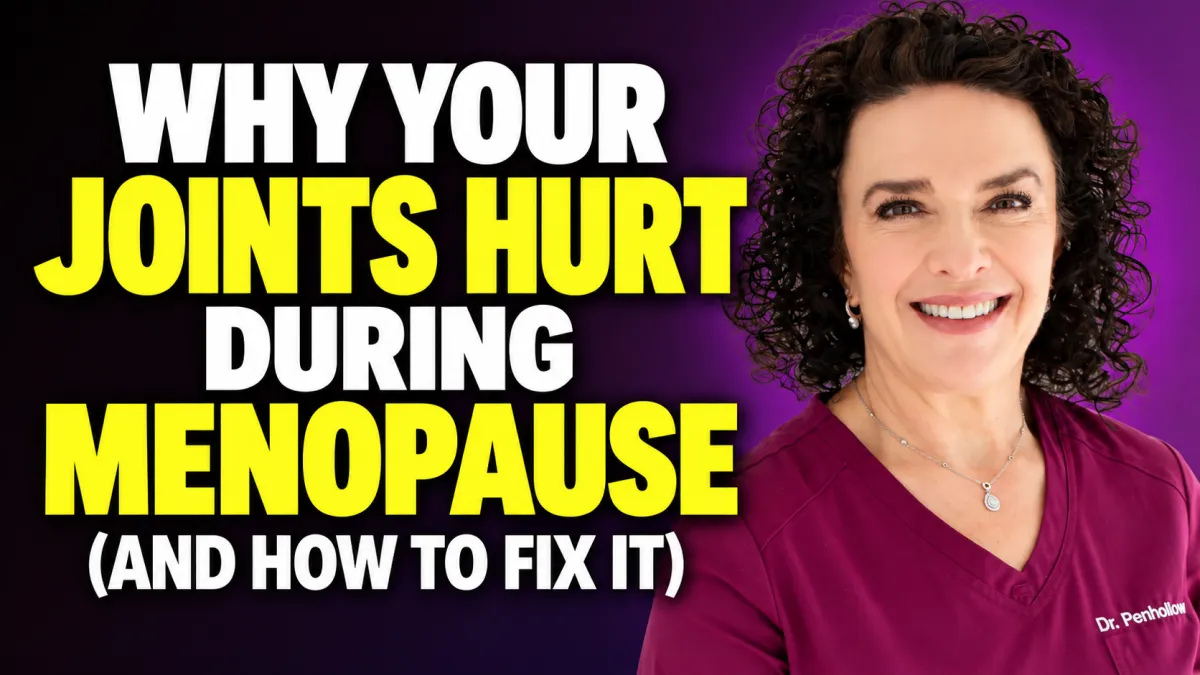
The Musculoskeletal Syndrome of Menopause: Why Your Joints Hurt and What to Do About It
If you are in your late 30s, 40s, or 50s and your body suddenly hurts in ways it never did before, you may wonder what changed. Your shoulder may become stiff, your feet may hurt when you get out of bed, your knees may ache, or workouts may suddenly feel harder.
You might blame aging, exercise, or worn-out joints. But these symptoms can sometimes be part of musculoskeletal syndrome of menopause, which connects hormonal changes during perimenopause and menopause with changes in your muscles, bones, joints, tendons, ligaments, and cartilage.
Understanding this connection can help you make better decisions about exercise, menopause treatment, and joint care before assuming you need an injection or procedure.
Episode Video
What Is Musculoskeletal Syndrome of Menopause?
Musculoskeletal syndrome of menopause describes a group of symptoms and physical changes associated with the hormonal transition through perimenopause and menopause. More than 70% of women going through menopause may experience musculoskeletal symptoms, while about 25% may experience disabling symptoms.
You may notice widespread body aches, joint pain, tendon problems, loss of muscle mass, declining bone density, or changes in cartilage. Frozen shoulder and plantar fascia-related foot pain can also appear during this stage of life.
These symptoms may seem unrelated, but declining estrogen may be one factor connecting them.
Why Perimenopause Can Cause Joint and Muscle Pain
Perimenopause can begin in your late 30s or early 40s and may continue for years. During this transition, estrogen levels fluctuate and eventually decline.
Estrogen affects more than your menstrual cycle. Your muscles, bones, tendons, ligaments, and cartilage also respond to it. As estrogen declines, these tissues may become less resilient while your muscle mass and bone density can also decrease.
This may help explain why you suddenly develop aches, injuries, or slower workout recovery even when your normal activities have not changed.
Muscle and Bone Loss Can Start During Perimenopause
Your bone density can begin declining during the menopause transition. Research has documented significant bone mineral density loss during this window, which can increase your long-term risk of osteoporosis and fractures.
Your muscle mass can decline as well. This age-related loss of muscle, known as sarcopenia, can affect your strength, balance, metabolism, and ability to remain active.
Protecting muscle mass and bone density during your 40s and 50s can therefore help protect your mobility and independence later in life.
Frozen Shoulder During Menopause May Have a Hormonal Connection
Frozen shoulder, also called adhesive capsulitis, can develop without an obvious injury. Your shoulder may gradually become painful and stiff, making it difficult to reach overhead, move your arm behind your back, or sleep comfortably.
While shoulder pain can have many causes, your hormonal transition may deserve consideration when frozen shoulder suddenly develops during perimenopause or menopause.
Instead of assuming you simply have arthritis or a rotator cuff problem, talk with your physician about whether your broader menopause symptoms could be relevant.
Morning Foot Pain May Be Connected to the Menopause Transition
You may wake up and feel heel or foot pain as soon as you take your first steps. Plantar fascia problems can occur during the menopause transition and may sometimes develop without an obvious change in your exercise routine or footwear.
That does not mean menopause causes every case of foot pain. But if morning foot pain appears alongside unexplained joint aches, stiffness, or other menopause symptoms, it may be worth looking at the bigger picture.
Your shoulder pain, foot pain, aching knees, and slower exercise recovery may not always be completely separate problems.
Don't Stop Strength Training Just Because Menopause Makes Exercise Harder
When exercise begins to hurt, you may instinctively lift lighter weights, stop resistance training, or switch entirely to cardio. Yet abandoning strength training can make it harder to preserve the muscle and bone you need as you age.
Progressive strength training during menopause can help support muscle mass, bone strength, mobility, and long-term physical function. The goal is not to ignore injuries or push through significant pain, but to use smart loading, proper form, and gradual progression.
For many women, two or three appropriately designed full-body strength sessions each week can be a practical starting point, although your needs should be adjusted for your health and physical condition.
Strength Training and Protein Help Protect Your Muscles
Resistance training gives your body a reason to maintain muscle and strength. Weight-bearing exercise can also support bone health, making both increasingly important as estrogen declines.
Your body also needs adequate nutrition to maintain and repair muscle. Protein needs vary based on your body size, health, activity level, and goals, so your ideal intake should be individualized when necessary.
Instead of assuming you should exercise less because you are getting older, focus on finding ways to continue training safely and consistently.
Menopausal Hormone Therapy May Be Worth Discussing
Menopausal hormone therapy may be an appropriate clinical option for some women during perimenopause and after menopause. Medical understanding of hormone therapy has evolved considerably since concerns surrounding early interpretations of the Women's Health Initiative.
Hormone therapy is not right for everyone. Your personal health history, symptoms, risks, and treatment goals should guide the decision.
If you have significant menopause symptoms alongside new joint, muscle, tendon, or bone problems, consider discussing your options with a physician who has current training and experience in menopause care.
Blood Tests Can Help Your Physician Look at the Bigger Picture
If unexplained joint and muscle symptoms appear during perimenopause, your physician may recommend a broader evaluation. Depending on your medical history and symptoms, this could include estradiol, follicle-stimulating hormone, thyroid function, vitamin D, or inflammatory markers.
Hormone levels can fluctuate during perimenopause, so one laboratory result does not necessarily tell the whole story. Your symptoms, menstrual history, age, physical examination, and overall health can also matter.
The goal is to understand why your symptoms are happening rather than focusing on a single test result.
Menopause Joint Pain Isn't Always “Just Aging”
If your body suddenly begins hurting during perimenopause, you do not have to automatically accept that it is simply part of getting older. At the same time, menopause should not be assumed to explain every painful joint.
Shoulder, knee, back, and foot pain can have many causes. But when several musculoskeletal symptoms develop around the same time as your menopause transition, musculoskeletal syndrome of menopause may deserve consideration.
Recognizing the larger pattern can help you and your physician make more informed decisions about treatment.
Understanding the Cause May Help You Avoid Unnecessary Joint Procedures
When your shoulders, knees, feet, or other areas hurt, it is easy to approach every joint as a separate problem. You may begin considering injections, platelet-rich plasma, bone marrow concentrate, surgery, or other procedures.
Those treatments can have appropriate uses for certain conditions. However, if hormonal and systemic changes are contributing to symptoms throughout your body, treating individual joints without examining the broader issue may leave an important part of the problem unaddressed.
A careful diagnosis can help you determine whether your symptoms require a joint-specific treatment, broader menopause care, exercise changes, or a combination of approaches.
What to Do About Joint Pain During Perimenopause and Menopause
Start by getting curious about why your body has changed instead of automatically stopping exercise or assuming you need a procedure. Discuss your musculoskeletal symptoms and menopause symptoms together with a physician who understands modern menopause care.
Continue or begin appropriate progressive strength training, prioritize protein and balanced nutrition, and address injuries rather than simply abandoning physical activity. You can also ask whether additional testing or menopausal hormone therapy should be considered based on your individual circumstances.
Most importantly, do not dismiss persistent symptoms simply because of your age. Earlier attention to muscle, bone, and joint health may help you preserve your physical function for decades.
Protect Your Strength and Mobility Beyond Menopause
The menopause transition can affect much more than hot flashes, sleep, and menstrual cycles. Changes in estrogen can also coincide with changes in your muscles, bones, joints, tendons, and overall physical function.
Recognizing musculoskeletal syndrome of menopause gives you a framework for understanding why frozen shoulder, morning foot pain, joint aches, muscle loss, and slower exercise recovery may appear during the same stage of life.
By understanding these changes, working with knowledgeable physicians, maintaining appropriate strength training, and supporting your body with good nutrition, you can make informed decisions designed to protect your strength, bone health, mobility, and quality of life as you age.
Frequently Asked Questions
Why do my joints suddenly hurt during perimenopause?
Declining and fluctuating estrogen may affect your joints, muscles, tendons, cartilage, and bones during perimenopause. Because joint pain can have many causes, persistent or severe symptoms should be evaluated by a physician.Can menopause cause my frozen shoulder?
Hormonal changes during menopause may be associated with musculoskeletal problems such as frozen shoulder or adhesive capsulitis. If unexplained shoulder pain and stiffness develop during your 40s or 50s, discuss your menopause transition with your physician.Why do my feet hurt in the morning during menopause?
Morning heel and foot pain may be related to plantar fascia problems, which can occur during the menopause transition. Because foot pain also has many other causes, ongoing symptoms should be properly evaluated.Should I keep lifting weights if my joints hurt during menopause?
You should not ignore significant pain or exercise through an untreated injury, but completely stopping strength training may not be necessary. Properly modified progressive strength training can help preserve your muscle mass, bone density, and physical function.Can menopausal hormone therapy help my joint pain?
Menopausal hormone therapy may be worth discussing if joint or muscle symptoms occur alongside other menopause symptoms. Whether it is appropriate for you depends on your medical history, individual risks, symptoms, and potential benefits.
If you're ready to take control of your knee pain, click here to discover more about these five effective knee pain home treatments. With these simple steps, you can start your journey towards pain-free knees and a more active lifestyle.


