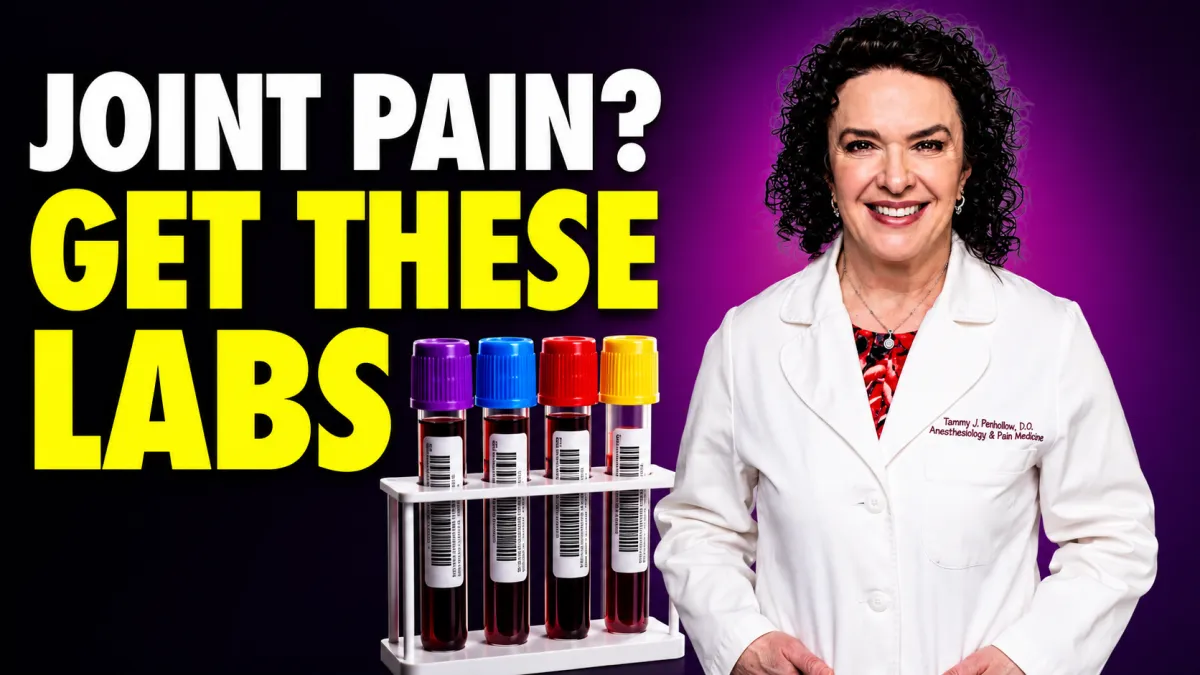
The Labs Your Joint Physician Should Be Ordering (and Usually Is Not)
If you are considering regenerative medicine for knee, hip, shoulder, or spine pain, your blood work matters. These tests can help your physician determine whether you are a good candidate, which procedure may fit you, and whether your body is ready to support recovery.
Regenerative medicine relies on your biology, especially with treatments such as platelet-rich plasma, or PRP. If important issues such as inflammation, poor nutrition, metabolic dysfunction, or hormone imbalance are missed, your body may not have the ideal environment for treatment. Blood work helps create a plan based on you instead of a standard template.
Episode Video
Blood Work Before Regenerative Medicine Measures Biological Readiness
Blood tests before surgery are often used to make sure you can safely undergo anesthesia and a procedure. Your physician may check for infection and look at kidney function, blood counts, and other basic health markers.
Regenerative medicine uses blood work for another important reason. Your results can help show what your body is capable of producing, whether inflammation is present, and whether your nutritional and metabolic health can support recovery. The goal is not just surgical clearance. It is biological readiness.
A Complete Blood Count Can Help Guide Your PRP Treatment
A complete blood count, or CBC, provides important information about your platelets, red blood cells, white blood cells, hemoglobin, and hematocrit. These numbers can directly influence how your regenerative medicine procedure is planned.
The CBC can be especially useful before PRP because PRP is made from your own blood. Your starting blood counts can affect how the PRP is prepared and whether another health concern should be addressed before treatment.
Your Platelet Count Can Affect PRP Preparation
Platelets are one of the key components of platelet-rich plasma. If your baseline platelet count is lower, your physician may need to adjust the amount of blood collected or the preparation process to reach the desired platelet dose.
This is one reason PRP should not automatically be performed the same way for every person. Your blood is unique, so reviewing your platelet count can help your physician build a treatment plan around your biology.
Hematocrit Can Affect the Amount of Plasma Available
Hematocrit measures how much of your blood is made up of red blood cells. If your hematocrit is high, there is proportionally less plasma available, which may affect PRP preparation.
Elevated hematocrit can occur for several reasons, including testosterone replacement therapy or living and training at altitude. Depending on your results and medical situation, your physician may recommend addressing the issue or adjusting the procedure before moving forward.
White Blood Cells Can Help Identify Possible Infection
Your white blood cell count and differential can provide clues about infection or other conditions affecting your immune system. An active infection can make a regenerative medicine procedure unsafe.
If your CBC suggests that something unusual is happening, your physician can investigate before treatment. Addressing a possible infection first is an important part of making regenerative medicine safer and more personalized.
A Comprehensive Metabolic Panel Shows Whether Your Body Can Support Recovery
A comprehensive metabolic panel, or CMP, gives your physician information about your kidney function, liver function, electrolytes, glucose, protein, and other metabolic markers. These systems play important roles in your overall health and recovery.
Your painful joint or spine does not operate separately from the rest of your body. If your metabolism or organ function is compromised, it may change how your physician approaches regenerative treatment.
Kidney and Liver Function Matter During Recovery
Your kidneys and liver help regulate your body's chemistry, process substances, and remove waste. Your physician may review these markers to better understand your overall health before treatment.
Significant abnormalities may require additional evaluation before a regenerative procedure. The goal is to make sure your treatment matches what your body can safely support.
Protein and Albumin Help Show Your Nutritional Status
Your body needs adequate nutrition to repair tissue. Total protein and albumin can provide useful information about whether your body has the nutritional building blocks needed for normal recovery.
If your protein status is poor, simply performing a technically successful procedure may not solve the underlying problem. Your physician may recommend addressing nutrition before asking your body to perform the work of healing.
Glucose Can Reveal Signs of Metabolic Dysfunction
Glucose is another important measurement on a CMP. An elevated glucose level may lead your physician to look more closely at blood sugar control, insulin sensitivity, and overall metabolic health.
Metabolic dysfunction can affect inflammation and the biological environment in which your cells operate. Identifying these problems before regenerative medicine gives you an opportunity to address them as part of your treatment strategy.
CRP and ESR Can Reveal Systemic Inflammation Before Treatment
High-sensitivity C-reactive protein, or hs-CRP, and erythrocyte sedimentation rate, or ESR, can help your physician evaluate systemic inflammation. Elevated inflammation may come from your painful joint, metabolic health, an autoimmune condition, infection, or another source.
If these markers are elevated, understanding why can be important before treatment. Regenerative medicine introduced into a highly inflamed biological environment may face different conditions than treatment performed after important sources of inflammation have been addressed.
Vitamin D Testing Matters for Bone, Muscle, and Immune Health
Vitamin D plays a role in bone health, muscle function, immune function, and inflammatory regulation. A common blood test measures 25-hydroxy vitamin D to determine whether your level is adequate.
If you have vitamin D deficiency or insufficiency, your physician may recommend correcting it as part of your preparation. Instead of waiting until after regenerative treatment, identifying the issue beforehand can help improve the biological environment supporting your recovery.
Thyroid Function Can Influence Your Muscles, Connective Tissue, and Recovery
Both an underactive and overactive thyroid can affect energy, muscle function, metabolism, connective tissue, and recovery. Thyroid disorders are also associated with some musculoskeletal problems, including adhesive capsulitis, commonly known as frozen shoulder.
If testing reveals abnormal thyroid function, your regenerative medicine physician may coordinate with your primary physician or endocrinologist. Addressing thyroid problems before treatment can be an important part of preparing your body for recovery.
Hormone Levels Can Affect Musculoskeletal Health and Healing
Hormonal health may be particularly important for women during perimenopause and postmenopause. Changes in estrogen can affect tendons, ligaments, cartilage, muscles, and other connective tissues, creating a different biological environment than you had earlier in life.
Hormones matter for men as well. Testosterone, cortisol, thyroid hormones, and other factors can influence muscle mass, metabolism, tissue repair, and recovery. When hormonal issues may be contributing to your symptoms, your physician can work with the appropriate specialist before regenerative treatment.
Precision Regenerative Medicine Should Be Customized to Your Biology
There should not be one identical lab panel for every person considering regenerative medicine. Your age, sex, medical history, medications, symptoms, activity level, previous treatments, and goals can all influence which tests your physician orders.
You are not being treated simply because of a lab number. Instead, your physician can use your laboratory results as important pieces of a larger picture. This approach helps match your treatment to your actual biology rather than applying the same procedure to everyone.
What Happens If Your Blood Work Is Abnormal?
An abnormal result does not always mean you cannot have PRP or another regenerative treatment. Instead, it may mean that something should be corrected, treated, or investigated before your procedure.
For example, your physician may address vitamin D deficiency, elevated inflammation, poor nutritional status, metabolic dysfunction, or thyroid problems first. Your platelet count and hematocrit may also affect how a PRP procedure is planned. In this way, the workup becomes part of your treatment.
Why Skipping Blood Work May Limit Regenerative Medicine Results
If important labs are skipped, you may proceed with treatment while metabolic dysfunction, inflammation, hormone problems, nutritional deficiencies, or blood abnormalities remain unidentified. These issues can affect the biological environment your treatment depends on.
The procedure itself is only one part of regenerative medicine. A careful evaluation can help your physician determine whether you are an appropriate candidate and whether your body needs additional preparation before treatment.
Final Thoughts
Before agreeing to PRP or another regenerative medicine procedure for joint or spine pain, ask what blood work will be reviewed. More importantly, ask how those results will affect your treatment plan.
Regenerative medicine asks your own biology to participate in recovery. Understanding that biology before treatment can help your physician confirm your candidacy, identify issues that deserve attention, and create a plan designed around you instead of a standard template.
Frequently Asked Questions
What blood tests do I need before regenerative medicine?
You may need a CBC, CMP, vitamin D, CRP, ESR, thyroid, and hormone testing before regenerative medicine. Your physician should choose your labs based on your health, symptoms, medications, and planned procedure.Do I need blood work before a PRP injection?
Blood work before a PRP injection can help your physician evaluate your platelet count, hematocrit, inflammation, metabolic health, and overall biological readiness. These results may also affect how your PRP treatment is prepared.Can I get PRP if my platelet count is low?
A low platelet count does not always mean you cannot have PRP treatment. Your physician may adjust the blood volume or PRP preparation based on your platelet count and medical history.Can low vitamin D affect my regenerative medicine treatment?
Vitamin D plays an important role in bone health, muscle function, immune function, and inflammation. If your vitamin D is low, your physician may recommend correcting the deficiency as part of your preparation for regenerative medicine.Why should I check inflammation markers before regenerative medicine?
Inflammation markers such as hs-CRP and ESR can help show whether you have elevated systemic inflammation before regenerative medicine. Your physician may investigate and address the cause before proceeding with PRP or another regenerative treatment.
If you're ready to take control of your knee pain, click here to discover more about these five effective knee pain home treatments. With these simple steps, you can start your journey towards pain-free knees and a more active lifestyle.


