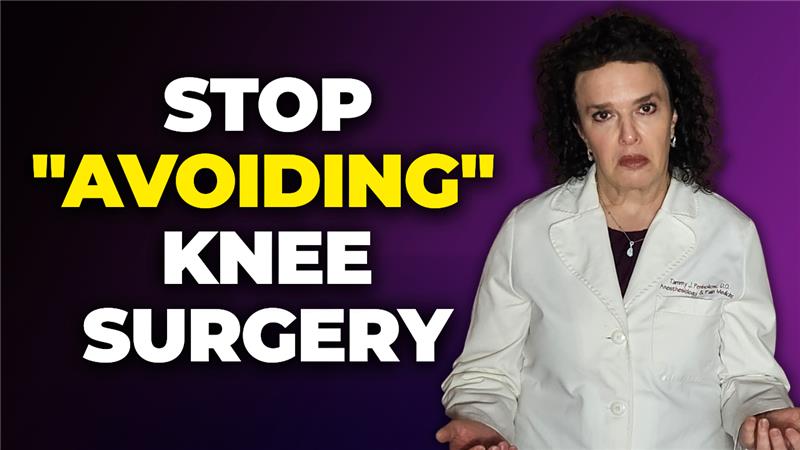
Why “Avoid Knee Surgery at All Costs” Keeps People Stuck in Pain
Avoiding knee surgery sounds like a smart and responsible goal. For many people dealing with chronic knee pain, stiffness, or instability, the idea of staying out of the operating room feels like a clear win. However, when avoiding knee surgery becomes the primary focus, it can quietly shift attention away from the more important question: what is actually happening inside the knee?
Many patients don’t begin their journey by asking what is structurally or biologically wrong. Instead, they ask what they can do to avoid surgery at all costs. While that reaction is understandable, it often replaces clarity with fear. When the goal becomes avoidance instead of understanding, decision-making can quickly go off track.
Episode Video
Avoiding Knee Surgery vs. Understanding the Real Problem
The conversation around avoiding knee surgery is often framed in black-and-white terms. Surgery is seen as failure, while non-surgical treatments are seen as success. This binary thinking is deeply misleading.
The real question is not whether surgery can be avoided. The real question is what problem needs to be solved. Is the main issue pain? Is it instability? Is inflammation the driving force? Is there progressive degeneration? Or is the patient losing function in daily life? Each of these problems requires a different approach, and they do not all lead to the same solution.
When everything is filtered through the lens of avoiding knee surgery, nuance disappears. A knee with mechanical instability is not the same as a knee overwhelmed by inflammation. A joint in early degeneration is not the same as one in an advanced stage of cartilage loss. Without clarity about the stage and underlying biology, treatment decisions become reactive rather than strategic.

How Fear and Marketing Influence Avoiding Knee Surgery
Once fear enters the conversation, shortcuts often follow. Patients who are focused on avoiding knee surgery may be offered repeated injections, supplements, or promises of regeneration without a careful analysis of whether those options truly fit the biology of their knee.
This is especially true in the world of regenerative medicine. Terms like stem cells and orthobiologics are frequently grouped together, even though they represent very different products. A patient’s own platelet-rich plasma, adipose tissue, or bone marrow are often discussed alongside birth tissue products that contain no live stem cells. When these distinctions are not clearly explained, confusion thrives.
In this environment, hope can easily replace strategy. Marketing messages often emphasize avoiding surgery without clearly addressing timing, appropriateness, or biological readiness. Without detailed conversations with a qualified doctor, patients may not understand whether their knee is too inflamed for certain treatments or whether mechanical instability needs to be corrected first. As a result, avoiding knee surgery becomes a slogan rather than a well-informed decision.
The Hidden Cost of Losing Agency
When patients focus exclusively on avoiding surgery, they often lose something essential: agency. Agency means understanding what is happening in the body well enough to make deliberate, informed choices rather than reacting out of fear.
Three critical elements tend to disappear when agency is lost.
The first is timing. Even the right treatment can fail if it is done at the wrong time. For example, introducing regenerative treatments into a highly inflamed knee may lead to disappointing results because the joint was not biologically ready.
The second is prioritization. Stability, inflammation, and mechanical alignment may need to be addressed before regenerative strategies can succeed. However, when avoiding knee surgery is the primary goal, patients may gravitate toward whatever sounds least invasive rather than what is most appropriate.
The third is honest conversation. Instead of asking whether a treatment fits their condition, patients begin asking whether it will help them avoid the outcome they fear. This can lead to years of cycling through repeated steroid injections or hyaluronic acid injections without meaningful progress. The knee pain persists, and the underlying issue remains unresolved.
A Smarter Approach to Avoid Knee Surgery
Avoiding knee surgery is not inherently wrong. In many cases, conservative treatment is entirely appropriate and effective. The problem arises when avoidance becomes the only objective.
A more effective strategy starts with clarity. When patients work with a knowledgeable physician to understand the stage of degeneration, the level of inflammation, the degree of instability, and the true source of their knee pain, better decisions follow. Sometimes that path leads away from surgery. Sometimes it leads toward it. Often, it leads to a thoughtful middle ground that includes structured rehabilitation, targeted injections, or regenerative techniques used at the correct time.
The key is shifting the mindset. Instead of asking how to avoid surgery at all costs, patients benefit from asking what problem they are trying to solve and what their knee needs right now. That shift restores agency and turns avoiding knee surgery from a reactive goal into an informed, strategic decision.
Final Thoughts
In the end, avoiding knee surgery should not be the primary objective. Clarity should be. When patients understand their diagnosis, the stage of their joint condition, and the realistic outcomes of different treatments, they can make decisions with confidence rather than fear.
Choosing a path forward is not just about selecting a treatment. It is about choosing how to think. By prioritizing understanding over avoidance, patients can move beyond hype, fear, and repetitive short-term fixes. Whether surgery becomes part of the solution or not, the most important outcome is regaining control, making informed choices, and addressing the real problem inside the knee.
Frequently Asked Questions
Is avoiding knee surgery always the best option for chronic knee pain?
Avoiding knee surgery is not always the best option, as the right choice depends on the stage of degeneration, level of inflammation, and mechanical stability of the knee.What treatments can help with avoiding knee surgery?
Physical therapy, anti-inflammatory strategies, platelet-rich plasma (PRP), lifestyle modifications, and targeted injections may help, depending on the specific knee condition.How do I know if my knee condition requires surgery?
A thorough evaluation by a qualified physician, including imaging and a physical exam, can determine whether your knee pain is manageable conservatively or if surgery is appropriate.Are regenerative treatments effective for avoiding knee surgery?
Regenerative treatments like PRP or bone marrow–based therapies may support healing in certain cases, but their effectiveness depends on proper timing and patient selection.Why do some non-surgical knee treatments fail?
Non-surgical treatments often fail when the underlying problem, timing, inflammation level, or joint mechanics are not properly addressed before treatment begins.
If you're ready to take control of your knee pain, click here to discover more about these five effective knee pain home treatments. With these simple steps, you can start your journey towards pain-free knees and a more active lifestyle.


