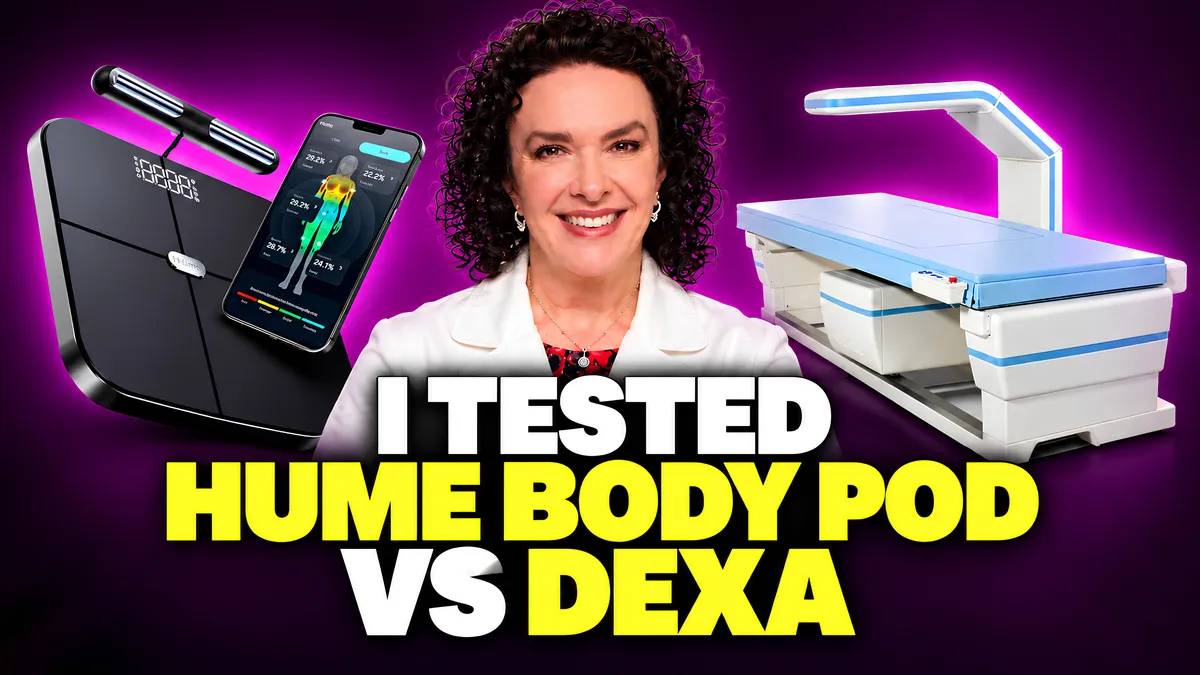
Hume Body Pod vs DEXA: My Actual Results
A scale reveals a single number, but it says nothing about what that number is made of. Muscle, fat, and water all register the same way, even though each one tells a very different story about health. For anyone trying to understand their body more clearly, that missing detail is a real limitation.
DEXA scanning is widely considered the gold standard for measuring body composition. The catch is practicality. DEXA scans are expensive and typically available only a couple of times per year, which makes them useless for tracking week to week progress. That gap has fueled growing interest in at home devices, and the Hume Body Pod is one of the most talked about options. The question is whether it can actually come close to DEXA.
Episode Video
How Accurate Is the Hume Body Pod?
Hume states that the Body Pod is validated to within about 98% of DEXA accuracy. Marketing claims deserve scrutiny, so a direct comparison offers a more meaningful test. In a side by side comparison against a personal DEXA scan, Hume readings landed within 1% of the DEXA results, and they remained consistent across repeated measurements.
That consistency matters. A home device does not need to replace DEXA outright; it needs to be reliable enough that changes in the numbers reflect real changes in the body.
How It Compares to Wearables and Clinic Devices
Many people assume their fitness tracker already covers body composition. It does not. Devices like Garmin, Apple Watch, and Fitbit do an excellent job with heart rate and sleep, but they do not measure muscle or fat.
Clinic based machines such as the InBody claim roughly 99% of DEXA accuracy. However, they generally require a per visit fee or a gym or clinic membership. That makes them a poor fit for anyone who wants a quick check every Monday morning without leaving the house.
Why Muscle Mass Deserves More Attention Than Weight
The case for tracking muscle goes well beyond aesthetics. Higher lean muscle mass is linked to a longer health span and a lower risk of disability. In other words, muscle is one of the clearest markers of how well the body is likely to hold up over time.
Sarcopenia and the Fall Risk Cascade
Age related muscle loss is called sarcopenia, and it ranks among the strongest predictors of frailty and falls. Falls are a common cause of hip and femur fractures, and those injuries can set off a chain of health complications that is very difficult to reverse. Seen through that lens, preserving muscle is less about appearance and more about protecting independence later in life.
How the Hume Body Pod Works
The Body Pod pairs a conventional scale with bioelectrical impedance, measured through handles the user holds while standing on the platform. From there, it reports muscle mass, body fat percentage, hydration, and a segmental breakdown showing pounds of muscle and fat in each arm, each leg, and the trunk.
Altogether, the device tracks more than 40 parameters, flagging each one as low, normal, or high. That level of detail opens the door to spotting imbalances that a standard scale would never reveal.
The Real Value Is in the Trend
Any single reading can be misleading. One unusually high or low measurement is best treated as noise. The meaningful information comes from the pattern that emerges over weeks and months of consistent tracking.
A Real World Example: Recovering After Shoulder Surgery
Segmental data proves especially useful during injury recovery. In one case following a shoulder injury and surgery, the right arm's muscle mass measured well below the left. Tracking continued through formal physical therapy and then a home rehab program, and the numbers showed the right arm gradually returning to equal. Eventually, the right arm measured slightly above the left, which fits the fact that it was the dominant side.
The striking part is that none of this could be judged from how the shoulder felt. Sensation alone gave no clear picture of rebuilding muscle, while objective measurement made the progress visible.
How to Get Reliable Readings
Because bioelectrical impedance is sensitive to the body's current state, consistency is everything. A few habits make readings far more trustworthy.
Measure at the same time each day. First thing in the morning, before eating, provides the most stable baseline.
Keep clothing similar. Wearing roughly the same thing each time removes an unnecessary variable.
Account for hydration. Hydration status can move the numbers more than almost any other factor. A spike after a salty dinner reflects water retention, not fat gain, so there is no reason for alarm.
Final Thoughts
For anyone focused on protecting strength with age, at home body composition tracking fills the space between a costly DEXA scan done twice a year and a bathroom scale that offers little insight. The Hume Body Pod provides a practical, consistent way to follow muscle, fat, and hydration trends over time. The full episode of Mobilize and Energize goes deeper, including the complete shoulder recovery story. Watch or listen on YouTube, Apple Podcasts, or Spotify, and subscribe for more on joint health, spine care, and smarter recovery.
Frequently Asked Questions
How accurate is the Hume Body Pod compared to my DEXA scan?
Hume claims about 98% of DEXA accuracy, and a direct comparison found readings within 1% of DEXA results.Can my Apple Watch or Fitbit measure my muscle mass?
No, most wearables track heart rate and sleep but do not measure muscle or fat.Why should I care about my muscle mass as I get older?
Low muscle mass is one of the strongest predictors of frailty and falls, which can lead to serious fractures.When should I measure myself for the most accurate reading?
The most reliable readings come first thing in the morning before eating, while wearing similar clothing each time.Why did my body fat reading jump after a salty meal?
That change most likely reflects water retention from shifting hydration, not an actual increase in fat.
If you're ready to take control of your knee pain, click here to discover more about these five effective knee pain home treatments. With these simple steps, you can start your journey towards pain-free knees and a more active lifestyle.


