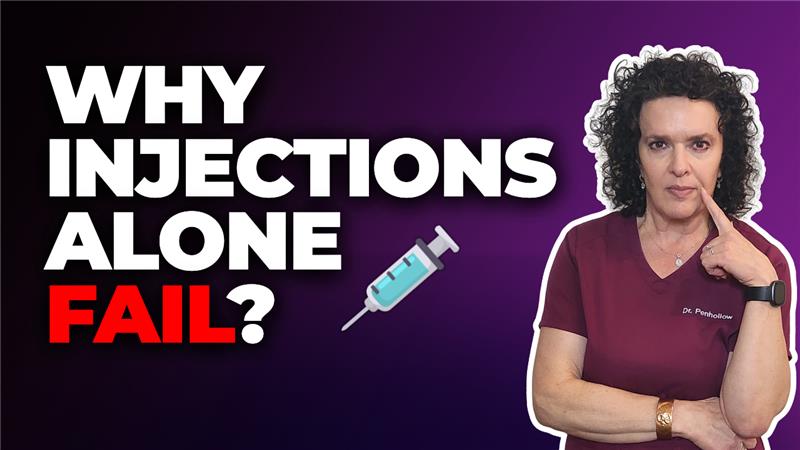
Stop! Don’t Get Knee Injections Until You Fix This
Regenerative medicine is often misunderstood as something that begins with an injection. Many people believe the injection is the treatment. In reality, a skilled regenerative medicine doctor sees injections as the final step, not the first. Skipping preparation is one of the biggest reasons regenerative treatments fail, and understanding why can completely change outcomes.
Episode Video
The Biggest Misunderstanding in Regenerative Medicine
One of the most common mistakes in regenerative medicine is rushing straight to injections. In a thoughtful medical practice, injections are something a physician arrives at only after careful evaluation. The real work happens before any biologic treatment is considered. When patients ask why regenerative medicine does not always work, the answer is rarely the injection itself. The real issue is what happened, or did not happen, before it.
Regenerative medicine amplifies what already exists in the body. If the internal environment is unhealthy, inflamed, or unstable, the results will reflect that. Preparation is not optional. It is the foundation.

Why Preparation Determines Success in Regenerative Medicine
Before any regenerative medicine injection, a doctor must understand what is truly driving the pain. Pain can be inflammatory, mechanical, structural, or a combination of all three. Injecting without knowing this is guesswork, and guesswork is not conservative or responsible care.
Labs often play a critical role because biology determines healing. When appropriate, physicians look at vitamin deficiencies, especially vitamin D3, hormone balance, markers of systemic inflammation, metabolic health, and organ function. Blood sugar control, kidney and liver health, and overall inflammatory status all matter. If the internal environment is not supportive of healing, biologic therapies struggle. Addressing these issues first dramatically improves outcomes.
How Medications Can Undermine Regenerative Medicine Results
Many people do not realize that certain medications can directly interfere with regenerative medicine treatments. Some drugs impair platelet function or blunt the very biological signals the therapy relies on. Before injections, a doctor may require temporary changes to medications when it is safe to do so.
Anti-inflammatory medications, timing of prescriptions, and chemical interference all matter. If the cells or proteins used in regenerative medicine are being suppressed before treatment begins, the therapy is compromised from the start. This step alone often separates true preparation from blind hope.
Movement, Stability, and Mechanics Matter in Regenerative Medicine
Regenerative medicine injections do not stabilize joints. They do not fix poor movement patterns. They do not correct muscle imbalances. Before any injection, a physician must evaluate dynamic instability, strength deficits, load tolerance, and kinetic chain dysfunction above and below the painful area.
Ignoring mechanics is one of the fastest ways to waste regenerative medicine treatments. If the body continues to move poorly, even the best biologic therapy cannot overcome faulty mechanics. Addressing movement first allows regenerative medicine to support real healing instead of fighting ongoing damage.
Nutrition and Sleep Are Core Parts of Regenerative Medicine
Healing tissue is metabolically expensive. Regenerative medicine depends on the body having the raw materials it needs to repair itself. Adequate protein intake, amino acid availability, anti-inflammatory nutrition, and consistent restorative sleep are essential.
Poor sleep, chronic inflammation, and inadequate nutrition make healing far more difficult. A doctor who takes regenerative medicine seriously will treat nutrition and sleep as part of the therapy, not as optional lifestyle advice.
Mindset and Engagement Shape Regenerative Medicine Outcomes
Regenerative medicine does not override basic physiology, and it does not work well as a passive quick fix. One of the strongest predictors of success is patient engagement. People who ask questions, understand trade-offs, participate in decisions, and follow through with recommendations consistently do better.
Those who want a simple injection without participation often struggle. Regenerative medicine works best when patients are active partners in the process, not spectators.
Why Regenerative Medicine Injections Are Sometimes Delayed or Declined
Regenerative medicine is collaborative by nature. When preparation is incomplete, a responsible doctor may delay or even decline an injection. This is not because the injection cannot be done, but because it is not yet the right time.
That decision protects outcomes, resources, and trust. In regenerative medicine, injections are earned, not automatic. The injection itself is not the treatment. Preparation is the treatment when biology, mechanics, and behavior are aligned.
Final Thoughts
Regenerative medicine can be powerful when done correctly. Even the best injection struggles in a poorly prepared body. That is why preparation is taken seriously in thoughtful regenerative medicine practices. When the groundwork is done properly, biologic therapies have the best chance to succeed and deliver meaningful, lasting results.
Frequently Asked Questions
What is the biggest reason regenerative medicine treatments fail?
The most common reason regenerative medicine fails is poor preparation before treatment. If inflammation, nutrition, movement problems, or metabolic issues are not addressed first, biologic therapies struggle to work effectively, even when the injection itself is done correctly.Why don’t regenerative medicine doctors start with injections?
In regenerative medicine, injections are not the starting point because they do not fix the underlying cause of pain. A physician must first understand whether pain is inflammatory, mechanical, or structural. Without that clarity, injections become guesswork instead of targeted treatment.Do medications affect regenerative medicine outcomes?
Yes, certain medications can interfere with regenerative medicine by blunting platelet function or healing signals. A doctor may adjust medications temporarily when it is safe to do so, helping create a better internal environment for biologic therapies to work.How important are nutrition and sleep in regenerative medicine?
Nutrition and sleep are critical for regenerative medicine success. Healing tissue requires adequate protein, anti-inflammatory nutrition, and restorative sleep. Without these, the body lacks the resources needed to respond properly to biologic treatments.Can regenerative medicine fix joint instability or poor movement?
Regenerative medicine injections do not correct joint instability or poor movement patterns. A physician must address strength, stability, and mechanics first. When movement issues are corrected, regenerative medicine can support healing instead of fighting ongoing stress and damage.
If you're ready to take control of your knee pain, click here to discover more about these five effective knee pain home treatments. With these simple steps, you can start your journey towards pain-free knees and a more active lifestyle.


