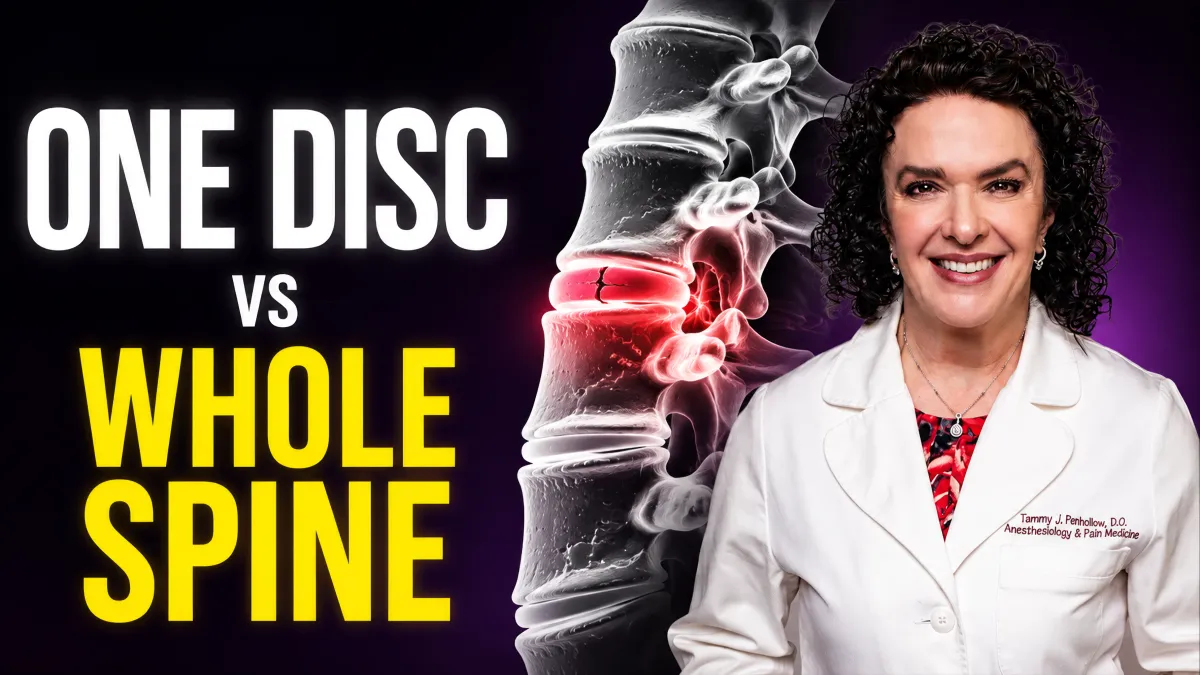
Why Treating One Disc Is Not the Same as Treating Your Spine
If you are living with lumbar spine pain, you may assume that the damaged disc shown on your MRI is the only reason you hurt. While a torn or degenerated disc can certainly cause pain, it is often only one part of a much larger problem. When you focus treatment on a single structure instead of the entire spinal system, you may continue experiencing pain even after a technically successful procedure.
This is exactly why understanding the functional spinal unit can help you make more informed decisions about your spine care. By looking beyond the disc and considering every structure that works together, you can better understand what may contribute to lasting pain relief.
Episode Video
Why a Disc Tear Is Not Always the Whole Problem
When you develop an annular tear, the tough outer layer of the spinal disc becomes damaged. This injury can allow pressure from the inner disc to create significant discogenic pain. Treating the disc directly is an important goal because it is a legitimate source of lumbar spine pain.
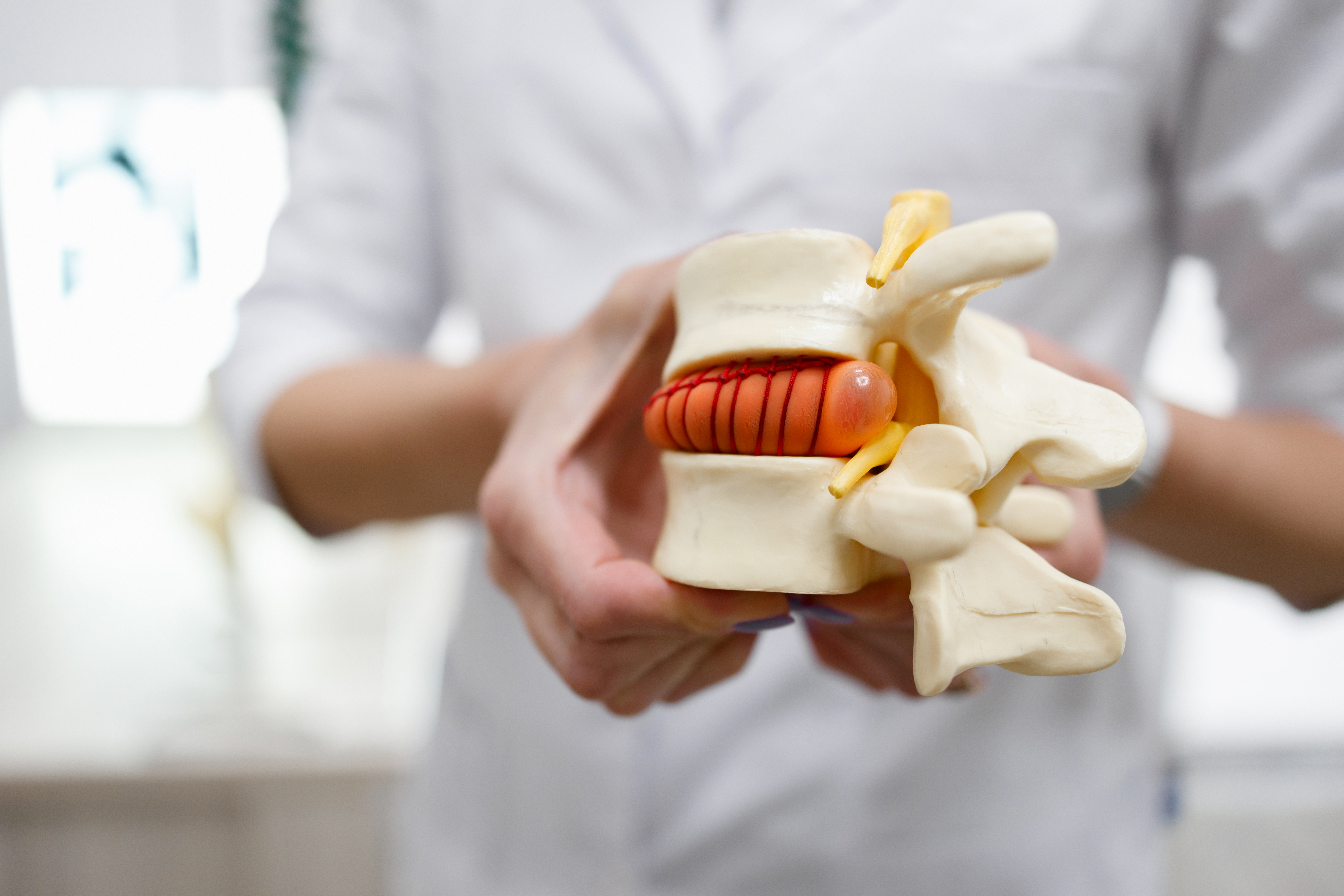
However, your disc never functions alone. Every spinal segment includes the disc, two facet joints, supporting ligaments, surrounding muscles, and nearby nerves. These structures constantly work together to support movement, absorb force, and stabilize your spine.
When one part begins to fail, the others must compensate. Over time, that compensation can create additional sources of pain that are not visible by simply focusing on the injured disc.
Understanding the Functional Spinal Unit
Every level of your spine functions as a complete mechanical system known as the functional spinal unit.
Your spinal disc absorbs vertical loads while your facet joints guide movement and help distribute pressure. Your ligaments prevent excessive motion, and your deep stabilizing muscles maintain control during everyday activities like walking, bending, lifting, and twisting.
When your disc becomes injured or degenerates, the entire system changes. Your facet joints begin carrying more weight than they were designed to handle. Your ligaments experience greater stress. Your stabilizing muscles receive altered nerve signals and become weaker. Instead of one isolated injury, your body develops a chain reaction that affects the entire spinal segment.
Why Single-Structure Spine Treatment May Leave Pain Behind
Many spine treatments focus on one specific structure. Whether you are considering a discectomy, spinal fusion, injections, or a biologic disc procedure, it is important to ask whether the rest of the spinal unit is also being evaluated.
A procedure may successfully treat the damaged disc while leaving overloaded facet joints, weakened ligaments, irritated nerves, and inhibited stabilizing muscles completely untouched.
When these additional pain generators remain untreated, spinal instability can continue. Even if your disc improves, your pain may not fully resolve because multiple structures continue contributing to your symptoms.
How Comprehensive Lumbar Spine Treatment Addresses the Entire System
A comprehensive treatment approach evaluates your lumbar spine as one connected unit rather than a collection of separate parts.
Instead of focusing only on the injured disc, your physician may also assess the facet joints, epidural space, supporting ligaments, sacroiliac joints, surrounding muscles, and the overall biological environment that influences healing.
When multiple pain generators are addressed together, the goal is not simply to reduce symptoms temporarily. The objective is to improve stability, reduce abnormal load distribution, interrupt the cycle of compensation, and create a healthier environment for long-term recovery.
Why Spinal Stability Matters for Long-Term Results
Your deep stabilizing muscles play a critical role in controlling movement between each vertebra. When pain alters muscle activation, these muscles often become less effective, allowing additional stress on the surrounding joints and ligaments.
If muscle function is not restored as part of your treatment plan, your spinal segment may remain unstable even after the injured disc has been treated.
Supporting spinal stability helps reduce ongoing mechanical stress and may improve the durability of your overall outcome.
Your Entire Body Influences Spine Health
Your lumbar spine does not work independently from the rest of your body. Problems involving your neck, hips, knees, pelvis, or overall movement patterns can affect how force travels through your spine.
This interconnected movement system, often called the kinetic chain, means that pain in one area may contribute to stress somewhere else.
In addition, inflammation, nutrition, metabolic health, and your body's healing capacity all influence recovery after spine treatment. Addressing these factors alongside structural problems creates a more complete treatment strategy.
Questions You Should Ask Before Choosing a Spine Procedure
Before moving forward with any lumbar spine treatment, make sure you understand whether your physician is evaluating your spine as a complete functional system.
Ask whether your treatment plan considers your facet joints, ligaments, stabilizing muscles, spinal mechanics, inflammation, and overall biological health. Ask how the surrounding structures will respond after the targeted disc is treated. These conversations can help you better understand whether your care addresses the cause of your pain or only the most obvious finding on imaging.
Looking Beyond MRI Findings
MRI scans provide valuable information, but they do not always identify every source of pain. The structure that appears most abnormal on imaging is not necessarily the only structure responsible for your symptoms.
A thorough clinical evaluation considers your physical examination, movement patterns, symptoms, spinal stability, and the interaction between multiple tissues. Looking at the complete picture may lead to more effective long-term treatment decisions.
Final Thoughts
If your lumbar spine pain involves more than one structure, treating only the damaged disc may leave important sources of pain unaddressed. A comprehensive approach that evaluates the entire functional spinal unit recognizes how discs, facet joints, ligaments, muscles, and surrounding tissues work together to support your spine.
When your treatment plan addresses the complete system instead of a single structure, you may improve spinal stability, reduce ongoing compensation, and create a stronger foundation for lasting pain relief.
Frequently Asked Questions
Why should I think about my entire spine instead of only my damaged disc?
Your spine functions as one connected system. Even if your disc is injured, your facet joints, ligaments, muscles, and surrounding tissues may also contribute to your lumbar spine pain.How do I know if my lumbar spine pain involves more than one structure?
If your pain continues despite previous procedures or treatments, multiple spinal structures may be involved. A comprehensive evaluation by a physician can help identify all possible pain generators.Should I ask my physician about the functional spinal unit before treatment?
Yes. Asking whether your physician evaluates your spine as a functional unit helps you understand if your treatment plan considers all structures contributing to your symptoms instead of focusing on only one area.Can MRI findings explain all of my back pain?
Not always. MRI images identify structural changes, but they do not always reveal every source of pain or explain how different spinal structures interact during movement.How can I improve my chances of long-term spine pain relief?
You can improve your chances by choosing a treatment plan that evaluates spinal stability, muscle function, ligaments, facet joints, inflammation, nutrition, and the overall function of your lumbar spine rather than concentrating on only one structure.
If you're ready to take control of your knee pain, click here to discover more about these five effective knee pain home treatments. With these simple steps, you can start your journey towards pain-free knees and a more active lifestyle.


